sábado, 17 de setembro de 2011

terça-feira, 23 de agosto de 2011
Algumas gírias em Inglês
thou - abreviação de thousand
tater - abreviação de potatoes (batata)
tall tale - história mirabolante
soopy - derivação de supermarket
sofa spud - pessoa que vive sentada no sofá vendo televisão
key pal - amigo de correspondência na internet
egghead - pessoa intelectual, cientista
call hogs - roncar alto
bellyache - reclamação , queixa
tater - abreviação de potatoes (batata)
tall tale - história mirabolante
soopy - derivação de supermarket
sofa spud - pessoa que vive sentada no sofá vendo televisão
key pal - amigo de correspondência na internet
egghead - pessoa intelectual, cientista
call hogs - roncar alto
bellyache - reclamação , queixa
Vocabulário da área de moda
Abaixo você encontra algumas palavras do vocabulário de moda em Inglês, mais precisamente usado para roupas esportivas. ;-)
Roupa esportiva - Sportswear
- agasalho com capuz: hooded sweat; hoodie
- agasalho de moletom: AmE sweatsuit; BrE tracksuit
- agasalho sem manga com capuz: sleeveless hoodie
- calça de corrida de moletom: jogging sweat pants
- calça de moletom com listra lateral: side-stripe track pants
- colete de moletom: sweatshirt vest
- leggings com tira sob o pé: stirrup leggings
- malha; blusão de moletom: sweatshirt
- moletom usado no avesso: sweatshirt worn inside out
Acessórios: accessories
- agasalho para o pescoço: neckwarmer
- cotoveleira: elbow pad
- faixa na testa; pulso: sweatband
- joelheira: knee pad
- munhequeira: wristband
- munhequeira com relógio: wristband watch
- polaina sobre leggings: legwarmer over leggings
- tornozeleira: ankle band
Roupa esportiva - Sportswear
- agasalho com capuz: hooded sweat; hoodie
- agasalho de moletom: AmE sweatsuit; BrE tracksuit
- agasalho sem manga com capuz: sleeveless hoodie
- calça de corrida de moletom: jogging sweat pants
- calça de moletom com listra lateral: side-stripe track pants
- colete de moletom: sweatshirt vest
- leggings com tira sob o pé: stirrup leggings
- malha; blusão de moletom: sweatshirt
- moletom usado no avesso: sweatshirt worn inside out
Acessórios: accessories
- agasalho para o pescoço: neckwarmer
- cotoveleira: elbow pad
- faixa na testa; pulso: sweatband
- joelheira: knee pad
- munhequeira: wristband
- munhequeira com relógio: wristband watch
- polaina sobre leggings: legwarmer over leggings
- tornozeleira: ankle band
quarta-feira, 10 de agosto de 2011

domingo, 17 de julho de 2011
Fidus Interpres
Estou louca por um livro sobre o mercado de tradução, e infelizmente, não encontro em site algum. Se alguém souber onde posso comprar, por favor, me mande o link. ;)

quarta-feira, 11 de maio de 2011
Indian Pudding - Creme de Fubá
A primeira menção escrita sobre Indian Pudding foi encontrada com data de 1722, e mais tarde, em 1796, o prato foi incluído no primeiro livro de receitas nos Estados Unidos, American Cookery, de Amelia Simmons. Essa é considerada a sobremesa mais tradicional da Nova Inglaterra.
terça-feira, 26 de abril de 2011
Dica de Leitura
Oi pessoal! Hoje eu vim postar no Blog apenas para comentar sobre um dos meus livros preferidos. O nome da obra é "Wuthering Heights" (O morro dos ventos uivantes), da escritora Inglesa Emily Brontë. Ela é uma das mais famosas obras da Literatura Inglesa, e foi adaptada para o cinema diversas vezes.

Wuthering Heights conta a éstoria de um amor "impossível" entre uma jovem Inglesa de boa família chamada Catherine Earnshaw, e um rapaz pobre (cigano) chamado Heathcliff, que foi acolhido por seu Pai. Logo depois que o Pai de Catherine falece, Heathcliff começa a ser tratado como um "animal" pelos outros habitantes da casa. Os dois sempre foram apaixonados, mas a moça acaba se casando com outro homem pela segurança financeira que ele pode lhe oferecer. Cheio de ciúme Heathcliff vai embora e volta tempos depois Rico e com sede de vingança...
*Claro que não vou contar o resto da obra! Vocês terão que ler para saber o final. :)
segunda-feira, 25 de abril de 2011
The origin of the fast food
Many people believe that Fast food is not only synonymous with the American lifestyle, but also had its origins in the United States. To some degree, these beliefs are understandable when one considers the significant impact on traditional cultures that the American media has had, that the term “Fast food” did not appear in the popular vocabulary until 1954 , the success of McDonald’s since Ray Kroc took over management control in 1955, and that the top ten global fast-food brands are US-owned and generate sales of over US$75 billion collectively.
However, much fast food is European in origin, with a considerable history. For example, John Stow’s 1598 survey of London mentions fast-food-like items, as does Henry Mayhew in his social history of London in the 1840s and 1850s. The hamburger derived from the Baltic provinces of Russia in the Middle Ages, where various tribes ate steak tar tare. These Tartars, or Tatars, introduced the delicacy to their German trading partners from the port of Hamburg. The Germans fried the meat and seasoned it with onions. When German immigrants arrived in the United States, they brought this steak dish with them. This said, there is also some evidence to suggest that the Romans ate a form of hamburger as long ago as about 500 bc, and the Romans are also on record as eating a type of pizza. The sandwich allegedly owes its existence to John Montagu, 4th Earl of Sandwich, who asked for such an item during a gambling session in the early 1770s. The debate concerning the origin of fish and chips, whether it derived from London or from Mossley in Lancashire, only serves to underline the European dimension.
Attributable to the United States is the standardized chain-owned fast-food concept, the subsequent innovations that improved the efficiency of these operations, and their growth through franchising from 1925. Frederick Harvey, an Englishman, is noted as the pioneer who, in 1876, created the uniformity in signs, décor and furnishings, and service staff attire that has become the hallmark of modern fast-food retailing. These features were also apparent in the development of the cafeteria in the 1890s, and later in the opening of Horn and Hardart’s first automat restaurant in 1902. Within the fast-food market, the origin of the standardized chain is attributed to the White Castle company, when Walter Anderson and Edgar Ingram opened their first store in 1921.
The McDonald brothers opened their redesigned restaurant in 1948, and several fast-food chains that exist today opened soon after. Burger King and Taco Bell got their start in the 1950s, and Wendy's opened in 1969. Some chains, like Carl's Jr., KFC and Jack in the Box, existed before the Speedee Service System, but modified their cooking techniques after its debut. McDonald's, which started it all, is now the world's largest fast-food chain.
According to the National Restaurant Association, American sales of fast food totaled $163.5 billion in 2005 . The industry is growing globally as well. Total sales for McDonald's grew 5.6 percent in 2005, and the company now has 30,000 franchised stores in more than 120 countries and .
However, McDonald's - and fast food in general - does not always get a welcoming reception around the world. McDonald's restaurants have been attacked in several countries, including the United States, China, Belgium, Holland, India, Russia, Sweden and the U.K. Protestors have accused McDonald's and other chains of selling unhealthy food, marketing aggressively to children and undermining local values and culture.

domingo, 24 de abril de 2011
Australian "kiss"
What's an Australian kiss?
The same thing as a French kiss, except down under.
 *It can also be called "Aussie kiss".
The same thing as a French kiss, except down under.
terça-feira, 12 de abril de 2011
"The Origin Of The Phrasal Verb"
Samuel Johnson was a distinguished 18th century English author who, in 1755, published the Dictionary of the English Language. In the preface he wrote:
“There is another kind of composition more frequent in our language than perhaps in any other, from which arises to foreigners the greatest difficulty. We modify the signification of many words by a particle subjoined…”
Dr. Johnson was one of the first lexicographers to pay close attention to what is referred to in Modern English as the phrasal verb; and he couldn’t have been any more accurate in stressing just how frequently we use them, and how dumbfounded foreigners are by them.
Apparently phrasal verbs have been present in the English language for centuries. Their ancestors can be found in Old English (mid 5th century to mid 12th) in the form of a prefix verb, meaning the particle always came attached to the verb as a prefix. Post verbal particles did exist; however they were relegated to stressing only direction, place, or physical orientation, as in “to grow up(ward)” (direction) or “to stand by” (place).
Many shifts and influences occurred in the English language which gave rise to the use of the phrasal verb during its Middle English phase. By late Middle English there were a myriad of phrasal verbs in different forms, from “understand” and “overtake” (remnants of Old English) to “take up” and “write-off”.
By early Modern English (late 15th century to mid 17th) phrasal verbs had exploded onto the scene. This is evident in the works of Shakespeare who employed them widely throughout his plays. In fact they were used quite extensively in dramatic texts from this time due to their varying shades of meaning and capacity to form new idioms. Their Latin or Old English based single-word verb roots were delegated to essays and academic writing, i.e. more formal works; a rule of thumb that exists until today.
To give you an example, the phrasal verb “to break up” is synonymous with the Latin based verb “to destroy”. Whereas “to destroy” is somewhat limited to its literal meaning, which is to ruin or demolish something completely, “to break up” has various shades of meaning, from taking something apart to ending a relationship.
Over the last four hundred years phrasal verbs have truly fixed themselves in colloquial English. However have no fear, English hasn’t abandoned its perfectly good single-word verbs…they’re just not as fun to use!


;)
sexta-feira, 1 de abril de 2011
"April Fool's Day" or "All Fool's Day"
April Fools' Day, sometimes called All Fools' Day, is one of the most light-hearted days of the year. Its origins are uncertain. Some see it as a celebration related to the turn of the seasons, while others believe it stems from the adoption of a new calendar.
Unlike most of the other nonfoolish holidays, the history of April Fool's Day, sometimes called All Fool's Day, is not totally clear. It is not like Halloween, where despite an interesting history, most people just put on Halloween costumes, get candy, and leave it at that. There really wasn't a "first April Fool's Day" that can be pinpointed on the calendar. Some believe it sort of evolved simultaneously in several cultures at the same time, from celebrations involving the first day of spring.
The closest point in time that can be identified as the beginning of this tradition was in 1582, in France. Prior to that year, the new year was celebrated for eight days, beginning on March 25. The celebration culminated on April 1. With the reform of the calendar under Charles IX, the Gregorian Calendar was introduced, and New Year's Day was moved to January 1.
However, communications being what they were in the days when news traveled by foot, many people did not receive the news for several years. Others, the more obstinate crowd, refused to accept the new calendar and continued to celebrate the new year on April 1. These backward folk were labeled as "fools" by the general populace. They were subject to some ridicule, and were often sent on "fools errands" or were made the butt of other practical jokes.
This harassment evolved, over time, into a tradition of prank-playing on the first day of April. The tradition eventually spread to England and Scotland in the eighteenth century. It was later introduced to the American colonies of both the English and French. April Fool's Day thus developed into an international fun fest, so to speak, with different nationalities specializing in their own brand of humor at the expense of their friends and families.

terça-feira, 29 de março de 2011
Lord Alfred Tennyson
Alfred Tennyson (1809-1892), English poet often regarded as the chief representative of the Victorian age in poetry. Tennyson succeeded Wordsworth as Poet Laureate in 1850. Alfred, Lord Tennyson was born on August 5, 1809 in Somersby, Lincolnshire. His father, George Clayton Tennyson, a clergyman and rector, suffered from depression and was notoriously absentminded. Alfred began to write poetry at an early age in the style of Lord Byron. After spending four unhappy years in school he was tutored at home. Tennyson then studied at Trinity College, Cambridge, where he joined the literary club 'The Apostles'. Tennyson died at Aldwort on October 6, 1892 and was buried in the Poets' Corner in Westminster Abbey.

"The Lady of Shalott" is a Victorian ballad by the English poet Alfred Tennyson.

The Lady of Shalott (painting)
quinta-feira, 10 de março de 2011
Louisa May Alcott

Louisa May Alcott was born in Germantown, Pennsylvania on November 29, 1832. She and her three sisters, Anna, Elizabeth, and May, were educated by their father, philosopher/ teacher Bronson Alcott, and raised on the practical Christianity of their mother, Abigail May. For Louisa, writing was an early passion. She had a rich imagination and often her stories became melodramas that she and her sisters would act out for friends. Louisa’s career as an author began with poetry and short stories that appeared in popular magazines. In 1854, when she was 22, her first book Flower Fables was published.
When Louisa was 35 years old, her publisher in Boston, Thomas Niles, asked her to write "a book for girls." Little Women was written at Orchard House from May to July 1868. The novel is based on Louisa and her sisters’ coming of age and is set in Civil War New England. "Jo March" was the first American juvenile heroine to act from her own individuality --a living, breathing person rather than the idealized stereotype then prevalent in children’s fiction.
In all, Louisa published over 30 books and collections of stories. She died on March 6, 1888, only two days after her father, and is buried in Sleepy Hollow Cemetery in Concord.

quarta-feira, 9 de março de 2011
Pães
Para se referir ao tradicional pãozinho francês diga roll, já no caso do pão de hambúrguer, redondo, a palavra correspondente em inglês é bun.

Veja no quadro abaixo alguns tipos de pão:
Pão de alho - Garlic bread
Pão de centeio - Rye bread
Pão de forma - Sliced loaf
Pão de queijo - Cheese bread
Pão integral - Wholemeal bread/Wholewheat bread
Pão sírio - Pita bread
Pão com gergelim - Sesame seed bread
terça-feira, 1 de março de 2011
Era Vitoriana
A Era Vitoriana foi o período no qual a Rainha Vitória reinou sobre a Inglaterra, no século XIX, durante 63 anos, de junho de 1837 a janeiro de 1901. Ela subiu ao trono quando seu tio Guilherme VI morreu sem deixar herdeiros. Ela foi coroada ainda muito jovem, aos 18 anos. Durante esse longo período, a Inglaterra atingiu o apogeu de sua política industrial e colonialista. Tornou-se a grande oficina do mundo, abastecendo os mercados mundiais com seus produtos industrializados. O reinado da rainha Vitória foi marcado pela prosperidade industrial da burguesia inglesa.

Na literatura destacaram-se a prosa de George Eliot, Charles Dickens, Sir Arthur Conan Doyle, das Irmãs Brontë, de Oscar Wilde, Lewis Carroll, Robert Louis Stevenson, entre outros; e a poesia de Tennyson, Dante Gabriel Rossetti, Swimburne, W. B. Yeats, Robert Browning, entre outros.
Abaixo encontra-se uma lista de algumas obras de autores que marcaram a literatura Vitoriana:
“Alice no País das Maravilhas” - Lewis Carroll
“O Morro dos Ventos Uivantes” - Emily Brontë
“O Marido Ideal” - Oscar Wilde
“Orgulho e Preconceito” - Jane Austen
-> Existe um filme onde é mostrada a vida da Rainha Vitória quando jovem, a atriz que interpreta a Rainha neste filme é a Inglesa Emily Blunt.

segunda-feira, 28 de fevereiro de 2011
F. Scott Fitzgerald

Francis Scott Key Fitzgerald foi um escritor norte-americano. Considerado o principal cronista da vida da alta sociedade dos EUA nos anos 20, a era do jazz. Tornou-se porta-voz da chamada geração perdida, que proclamava a falência do sonho norte-americano de uma sociedade harmônica. Filho de uma família de alta classe média, fez seus estudos na Universidade de Princeton, mas não chegou a se formar. Seu primeiro romance, Este Lado do Paraíso, publicado em 1920, foi um sucesso imediato. Em pouco tempo, vendeu 50 mil exemplares --quantidade fantástica para a época. Fitzgerald logo tornou-se o autor mais bem pago de seu tempo. Lançou Seis Contos da Era do Jazz em 1922; e três anos mais tarde surgiria O Grande Gatsby (seu maior sucesso).
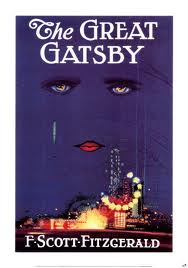
;)
quarta-feira, 23 de fevereiro de 2011
Agatha Christie
Agatha Christie é conhecida pelo mundo como a Rainha do Crime. Seus livros venderam mais de um bilhão de cópias em inglês com outro bilhão em línguas estrangeiras. Ela é autora mais publicada de todos os tempos em qualquer idioma, somente ultrapassada pela Bíblia e por Shakespeare.

Abaixo encontra-se uma lista de algumas obras da escritora:
O misterioso caso de Styles - The mysterious affair at Styles
Assassinato de Roger Ackroyd - The murder of Roger Ackroyd
Assassinato na casa do pastor - The murder at the vicarage
O caso dos dez negrinhos - The little niggers or "And then there were none"
Um crime adormecido - Sleeping murder
Assassinato no expresso oriente - Murder on the orient express ( Recomendo também o filme, que foi adaptado ao cinema com direção de Sidney Lumet e, em 1975, Ingrid Bergman recebeu o Oscar de melhor atriz coadjuvante por seu papel no filme).
Curiosidade :
- Em 1971, um caso de envenenamento foi solucionado porque o detetive leu um dos seus livros 10 anos antes.
"Como acontece com a maior parte das coisas da vida, apreciamos ficar assustados - mas não demais..." Agatha Christie em sua autobiografia ;*
sexta-feira, 11 de fevereiro de 2011
*Hamburger*
O nome desta comida americana tem sua origem no nome da cidade de Hamburgo, na Alemanha. Massa redonda e fina feita com carne moída, misturada com cebola, ovos etc. e frita, já era uma comida comum na região báltica séculos atrás. A idéia de comer assim foi levada para os Estados Unidos pelos imigrantes do porto de Hamburgo, onde foi também chamada de beefburger ou, simplesmente, burger, para evitar a confusão com o nome ham, que, em inglês, é “presunto”, ou “pernil”. Hoje, existem inúmeras variedades com ingredientes diferentes. Por exemplo: cheeseburger, chickenburger, vegeburger. Normalmente o burger é servido em um pão redondo chamado em inglês de bun.

Referência: “OK! Curiosidades divertidas do inglês” de Jack Scholes – Editora Campus/Elsevier.
quarta-feira, 9 de fevereiro de 2011
Phrasal Verbs !
Alguns Phrasal Verbs ;)
Fool with = Brincar com coisas perigosas.
Double back = Retornar, voltar atrás (pelo mesmo caminho).
Doll up = Enfeitar-se, embonecar-se.
Root for = Torcer por, apoiar .
Stick at = Insistir, persistir (em algo).
Truss up = Amarrar, atar (pessoa ou animal).
Tug at = Dar um puxão bem rápido.
Wade through = Dispender muito tempo e esforço com a leitura de algo, geralmente um assunto difícil e entediante.
Zonk out = Dormir, cair no sono, fazer perder a consciência, perder a consciência, apagar (sob efeito de drogas ou anestesia).
Double back = Retornar, voltar atrás (pelo mesmo caminho).
Doll up = Enfeitar-se, embonecar-se.
Root for = Torcer por, apoiar .
Stick at = Insistir, persistir (em algo).
Truss up = Amarrar, atar (pessoa ou animal).
Tug at = Dar um puxão bem rápido.
Wade through = Dispender muito tempo e esforço com a leitura de algo, geralmente um assunto difícil e entediante.
Zonk out = Dormir, cair no sono, fazer perder a consciência, perder a consciência, apagar (sob efeito de drogas ou anestesia).
Voucher
Comprovante de pagamento antecipado de despesas de viagem (como reservas em hotéis, refeições, aluguel de automóvel etc.) emitido por agências e operadores de viagem.


Referência: “Dicionário de Anglicismos e de Palavras Inglesas Correntes em Português” de Agenor Soares dos Santos – Editora Campus/Elsevier, 2006.
;)
Assinar:
Postagens (Atom)